


- Home >
- College of Agriculture
- > 2026 NRC Field Day
TSUAg Field Day Connects Nursery Research with Tennessee Growers
The Otis L. Floyd Nursery Research Center welcomed growers, industry leaders and TSU officials to McMinnville for a hands-on look at research supporting one of Tennessee agriculture's strongest industries
By Zekeya Harrison
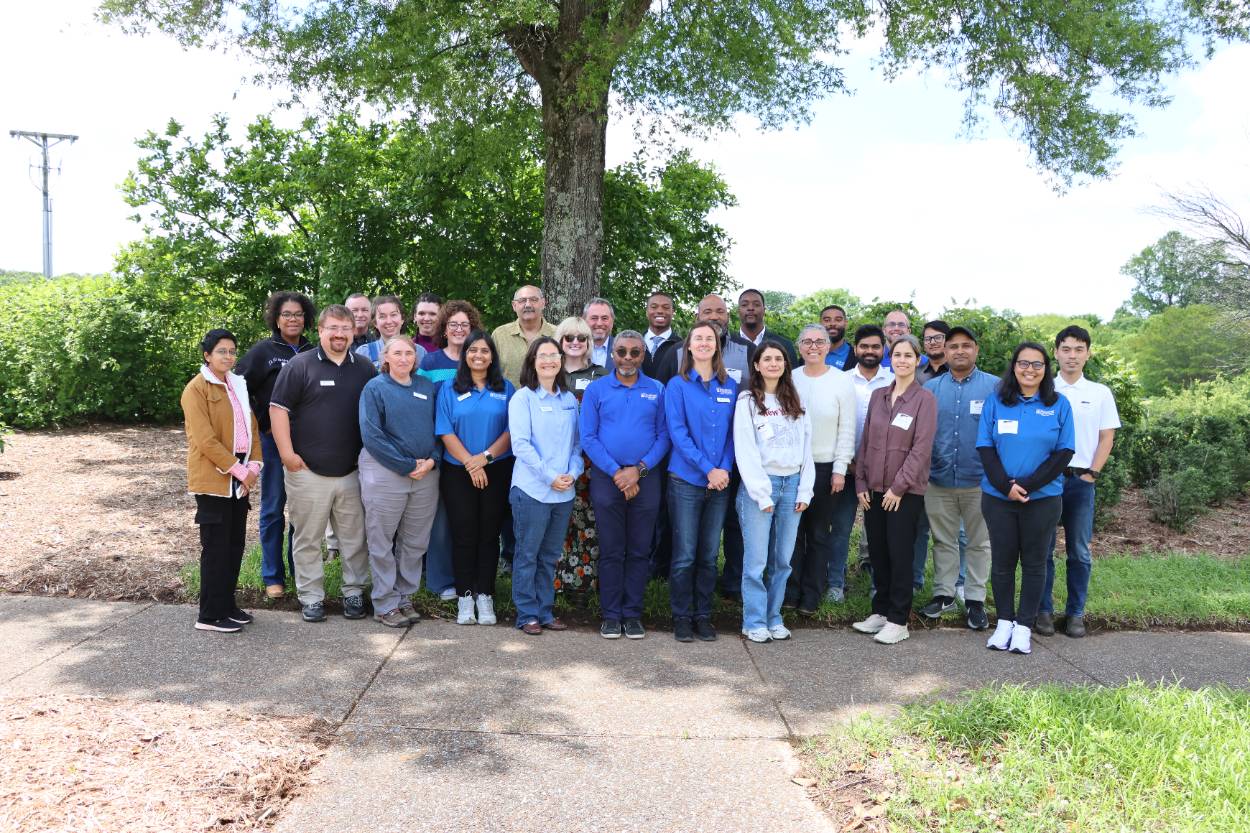 From robotic spraying technology to innovative disease prevention strategies, the Tennessee State University Otis L. Floyd Nursery Research Center Field Day 2026 highlighted how research at the TSU College of Agriculture continues to support and strengthen Tennessee’s thriving nursery industry.
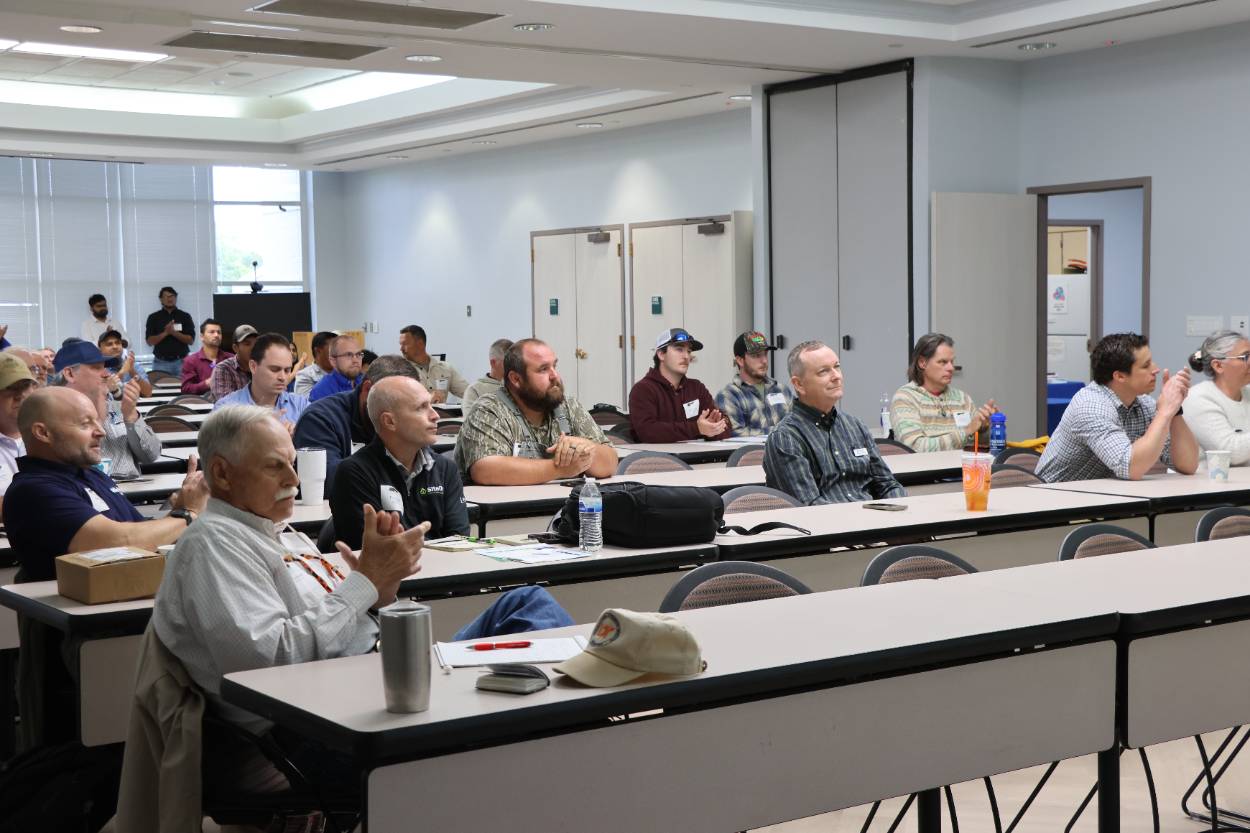
Growers, researchers, educators, vendors and students gathered Thursday, May 7, at the Otis L. Floyd Nursery Research Center in McMinnville for a day of presentations, demonstrations and hands-on learning opportunities focused on the future of nursery production.
The annual event featured sessions on developing pest threats, pre-emergent herbicides, robotic spraying in specialty crops, vascular streak dieback updates, ambrosia beetle management and irrigation system design. Attendees also toured research labs and participated in live demonstrations in the afternoon.
Located in the heart of one of the nation’s most significant nursery production regions, the Nursery Research Center plays a vital role in supporting growers across Tennessee and beyond through research and Extension efforts in horticulture, entomology, pathology, sustainability and nursery production.
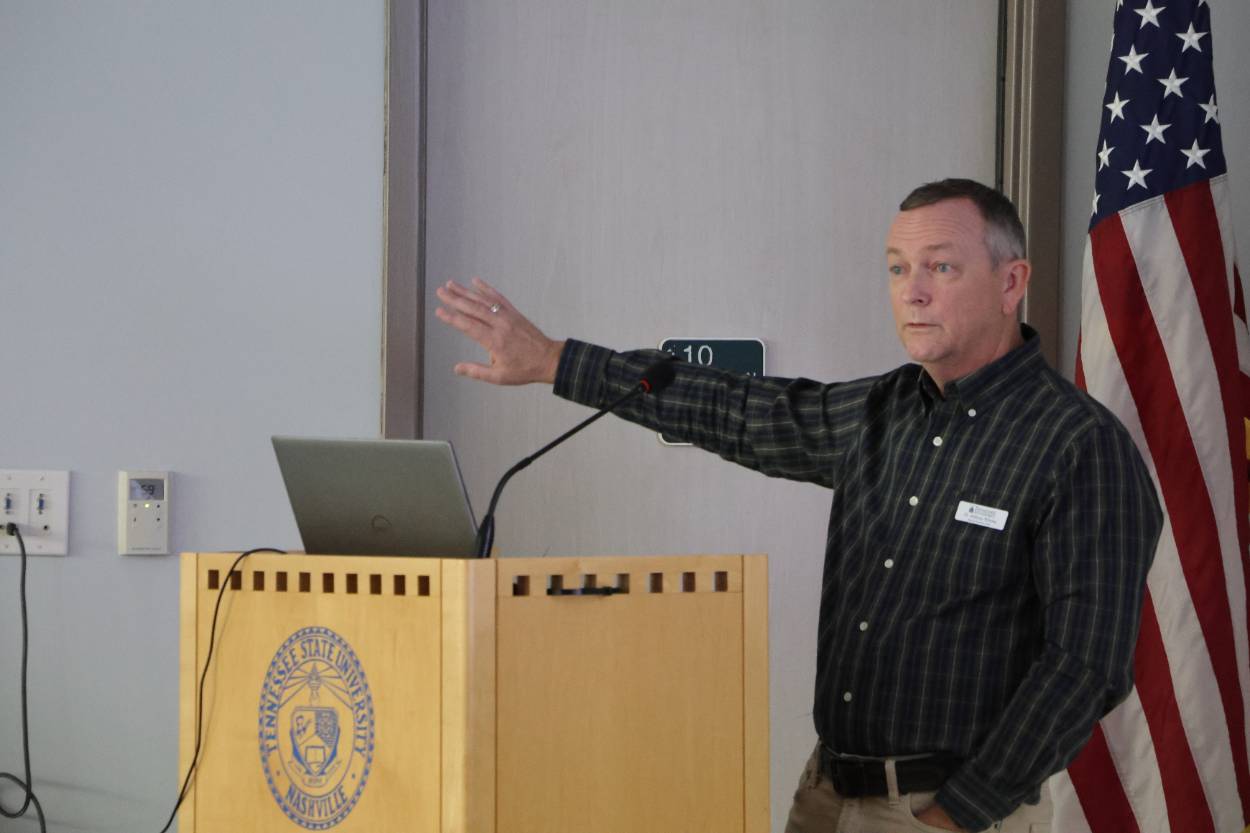
Dr. Anthony Witcher, associate professor in TSU’s Department of Agricultural Sciences and Engineering, shared research focused on the timing and effectiveness of pre-emergent herbicides in field nurseries and how growers can maximize weed control while reducing costs.
“The research that we’re doing is really for them,” Witcher said of the growers in attendance. “We’re trying to do things that are practical and applicable to them. It gives them a chance to come in, talk to us and really get an idea about the work we’ve been doing recently and how it affects them.”
Witcher said the event also gives researchers an opportunity to directly connect with industry stakeholders and provide information growers can immediately apply to their operations.
“Which herbicides can benefit them, which ones may be more cost effective and which ones save them money in the long run while still working effectively on their crops - those are the kinds of things we’re focused on,” he added.

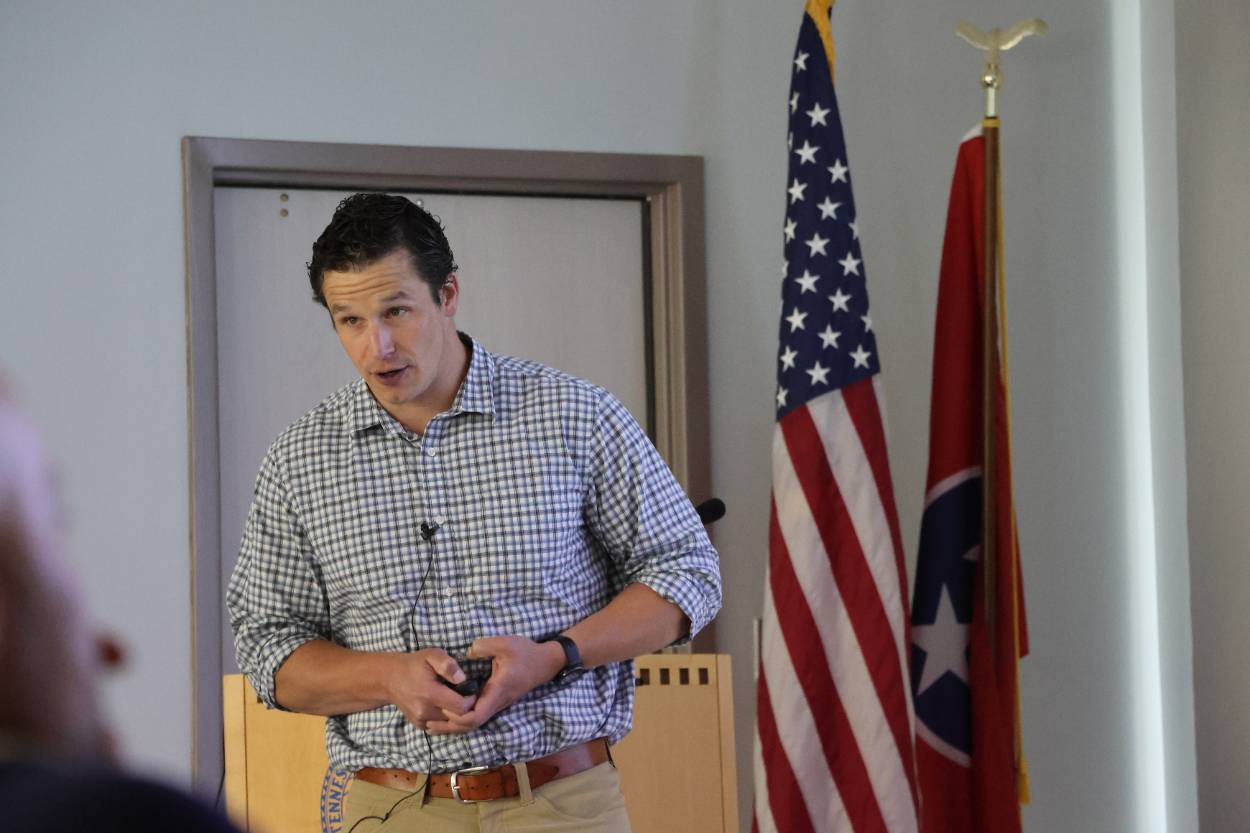
A large TSU contingent traveled from Nashville to support the event, including Interim Provost Dr. Erik Schmeller and representatives from the College of Agriculture. Members of TSU Facilities Management, who recently completed renovations at the Nursery Research Center, were also in attendance.
With nearly 700 growers contributing approximately $285 million in annual cash receipts, Tennessee’s nursery industry remains one of the state’s strongest agricultural sectors. Events like Field Day help ensure growers remain informed about the latest research, emerging challenges and evolving technology shaping the industry.
As conversations continued between researchers and growers throughout the day, the event reinforced the Nursery Research Center’s mission of delivering practical solutions and meaningful innovation to one of Tennessee agriculture’s most important industries.
###